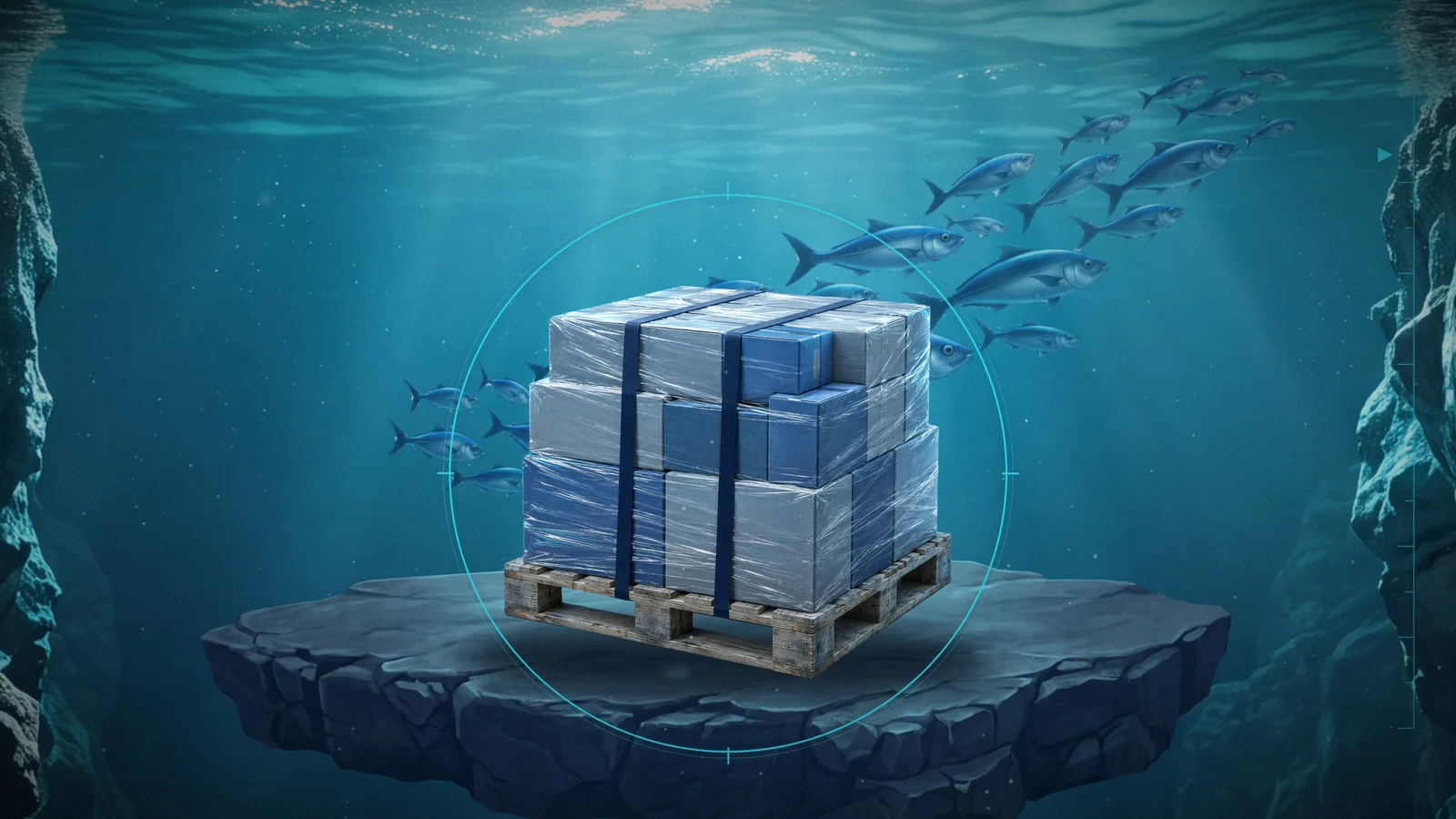
Somewhere between “We need this shipped” and “Delivered,” there is usually a whole ocean of moving parts: shippers, carriers, drivers, dispatchers, brokers, rate confirmations, appointment times, tracking updates, paperwork, traffic, weather, and at least one person asking, “Where's the truck?”
That is where freight brokerage comes in.
A freight broker helps connect companies that need to move freight with carriers that have the trucks, equipment, and capacity to move it. The broker coordinates the details between the two sides, helping keep freight moving while handling the communication and logistics that come with getting a load from Point A to Point B.
And while freight brokerage may sound straightforward on paper, anyone who has spent enough time around trucking knows that the ocean rarely stays calm.
In this guide, we'll explain what freight brokerage is, how freight brokers work, how brokers differ from carriers and 3PLs, how freight rates are determined, and what companies should look for when choosing a freight brokerage partner.
Table of Contents
How Does Freight Brokerage Work?
What Does a Freight Broker Do?
What Is the Difference Between a Freight Broker and a Carrier?
What Is the Difference Between a Freight Broker and a 3PL?
Why Do Companies Use Freight Brokers?
How Are Freight Rates Determined?
What Types of Freight Do Freight Brokers Handle?
What Happens When a Freight Shipment Is Delayed?
8 ft
What Is Freight Brokerage?
Freight brokerage is the process of connecting shippers that need to transport goods with qualified carriers that can move those goods.
A freight broker acts as an intermediary between the shipper and the carrier. The broker typically does not physically transport the freight. Instead, the broker coordinates the transportation process, helping the shipper find available capacity and helping the carrier find freight that fits its equipment and operating area.
Think of a freight broker as the person standing in the middle of a very busy harbor, making sure the right cargo gets onto the right vessel.
Except the vessels have 18 wheels, the harbor is usually several states away, and someone is probably calling because the appointment time changed.
Freight brokers can help coordinate everything from finding carrier capacity and negotiating rates to tracking shipments, communicating updates, and helping resolve problems when the original transportation plan gets a little... creative.
16 ft
How Does Freight Brokerage Work?
The basic freight brokerage process can be broken down into several steps:
Shipper  Freight Broker Carrier Pickup Transportation Delivery
Here's what that looks like in practice.
A Shipper Needs to Move Freight
A manufacturer, distributor, retailer, wholesaler, or other business has freight that needs to get from one location to another.
The shipment may require a specific type of equipment, weight capacity, delivery schedule, or transportation service.
The Freight Broker Finds Transportation Capacity
The broker searches for an appropriate carrier based on factors such as:
- Pickup and delivery locations
- Equipment requirements
- Freight type
- Weight
- Delivery schedule
- Carrier availability
- Lane and market conditions
The Broker and Carrier Agree on the Rate
The broker communicates with carriers and negotiates transportation pricing based on the shipment and current market conditions.
Once the carrier accepts the load, the transportation details are documented in a rate confirmation.
The Carrier Picks Up the Freight
The carrier arrives at the shipper's facility, picks up the cargo, and begins transportation. This is where the plan officially leaves the spreadsheet and meets reality.
The Shipment Is Tracked During Transit
The broker may communicate with the carrier and shipper throughout the shipment to provide updates and identify potential problems.
Traffic happens. Weather happens. Mechanical issues happen. Sometimes a facility that promised a one-hour loading time has a very different definition of the word “hour.”
Communication becomes particularly important when the original plan changes.
The Freight Is Delivered
The carrier delivers the shipment to the receiver and provides the required delivery documentation.
The broker can then help complete the administrative side of the shipment and maintain communication between the parties.
The basic process is simple.
Keeping all the pieces moving in the same direction is where the real work happens.
23 ft
What Does a Freight Broker Do?
A freight broker coordinates transportation between shippers and carriers and helps manage the logistics surrounding a shipment.
Depending on the shipment and brokerage, responsibilities can include:
- Finding available carrier capacity
- Matching freight with appropriate equipment
- Negotiating transportation rates
- Communicating with shippers
- Communicating with carriers and drivers
- Providing shipment details
- Coordinating pickup and delivery appointments
- Tracking shipments
- Providing status updates
- Helping manage delays
- Coordinating changes to transportation plans
- Handling transportation documentation
- Helping resolve issues between shipment stakeholders
The broker's job isn't simply to “find a truck.”
The goal is to help make sure the right carrier, equipment, timing, communication and transportation plan
come together for the shipment. Because finding a truck is one thing.
Finding the right truck for the right freight at the right time while everyone involved knows what's happening is a different sport entirely.
31 ft
What Is the Difference Between a Freight Broker and a Carrier?
The simplest distinction is this:
A carrier transports the freight. A freight broker arranges the transportation.
A carrier typically operates trucks and other transportation equipment and employs or works with drivers who physically move the freight.
A freight broker, on the other hand, connects shippers with carriers and coordinates the transportation arrangement.
Freight Broker | Freight Carrier |
Arranges transportation | Physically transports freight |
Connects shippers with carriers | Operates trucks and equipment |
Coordinates shipment details | Picks up and delivers freight |
Negotiates transportation rates | Receives payment for transportation |
Communicates with multiple parties | Communicates about its shipment and transportation |
Both play important roles in the freight transportation process. A broker without reliable carrier capacity has a problem.
A carrier without freight has a different problem.
Somewhere in the middle, everyone starts making phone calls.
39 ft
What Is the Difference Between a Freight Broker and a 3PL?
Freight brokers and third-party logistics providers (3PLs) both help businesses manage transportation, but the services they provide can differ.
A freight broker primarily acts as an intermediary connecting shippers with transportation providers. A 3PL may provide a broader range of logistics services, potentially including:
- Freight brokerage
- Transportation management
- Warehousing
- Distribution
- Inventory management
- Fulfillment
- Technology and logistics planning
The exact services offered depend on the provider.
In other words, freight brokerage can be one component of a broader 3PL relationship. It's a little like comparing a shark to the entire ocean.
Related? Absolutely.
Exactly the same thing? Not quite.
47 ft
Why Do Companies Use Freight Brokers?
Companies often use freight brokers because managing transportation internally can require significant time, carrier relationships, market knowledge and operational resources.
A freight broker can provide access to a broader network of transportation providers and help companies manage individual shipments without having to build every carrier relationship themselves.
Access to Carrier Capacity
A broker may have relationships with carriers operating across different lanes and regions, which can make it easier to locate transportation capacity.
Flexibility
Shipping needs change.
A company may need one truck today, several trucks tomorrow, and a completely different equipment type next week.
A brokerage can help companies respond to those changing transportation requirements.
Time Savings
Instead of contacting multiple carriers, comparing availability, coordinating details and tracking shipments independently, a company can work through a transportation partner.
Market Knowledge
Freight markets change constantly.
Capacity, fuel costs, seasonality, weather, demand and regional freight patterns can all affect transportation. An experienced brokerage can bring knowledge of those conditions to the table.
Problem Solving
And then there are the moments when the ocean gets choppy.
A truck breaks down. A facility is running behind. Weather disrupts a route. An appointment changes. A good freight brokerage doesn't make problems disappear.
It helps manage them.
54 ft
How Are Freight Rates Determined?
There isn't one universal freight rate.
Transportation pricing can depend on a combination of factors, including:
- Distance
- Origin and destination
- Freight type
- Weight
- Equipment requirements
- Market demand
- Available capacity
- Fuel costs
- Seasonality
- Pickup and delivery requirements
- Transit time
- Current lane conditions
This is why freight rates can change even when the origin and destination remain the same. Freight markets behave a little like tides.
Sometimes the water is calm.
Sometimes the tide comes in and everyone suddenly has a completely different number in mind. For shippers, understanding the factors behind transportation pricing can help create more realistic expectations.
For carriers, understanding the market can help when evaluating available freight.
And for brokers, balancing shipper expectations with carrier capacity is part of the everyday job.
62 ft
What Types of Freight Do Freight Brokers Handle?
Freight brokers can coordinate transportation for many different types of shipments and equipment. Common freight categories include:
Dry Van Freight
Dry vans are enclosed trailers commonly used for general, non-temperature-controlled freight.
They are widely used for products such as packaged goods, consumer products, manufactured goods and other dry freight.
Reefer Freight
Refrigerated trailers are used for temperature-sensitive products that require controlled conditions during transportation.
Flatbed Freight
Flatbed trailers are commonly used for freight that may be oversized, unusually shaped, or difficult to load into an enclosed trailer.
Expedited Freight
Some shipments require faster transportation because of production schedules, customer commitments, emergencies or other time-sensitive requirements.
LTL Freight
Less-than-truckload shipping is used when a shipment does not require an entire truck.
The appropriate transportation option depends on the freight itself, the shipping requirements and the company's priorities.
70 ft
What Happens When a Freight Shipment Is Delayed?
This is where transportation stops being a neat flowchart and starts becoming real life. A shipment can be delayed by:
- Severe weather
- Traffic
- Mechanical problems
- Loading delays
- Unloading delays
- Appointment issues
- Road closures
- Driver hours-of-service limitations
- Incorrect or changing shipment information
- Facility congestion
When a delay occurs, communication becomes critical.
The broker may need to communicate with the driver, carrier, shipper and receiver to understand the situation and determine what happens next.
That might mean:
- Updating an appointment
- Notifying the customer
- Providing a revised ETA
- Coordinating with the facility
- Documenting the delay
- Discussing detention or other accessorial charges when applicable
- Finding an alternative solution
The worst thing that can happen during a freight problem isn't always the problem itself. Sometimes it's simply that nobody knows what's happening.
A good transportation partner keeps communication moving even when the truck isn't.
78 ft
How to Choose a Freight Brokerage Company
Choosing a freight brokerage partner isn't just about finding the lowest transportation price. Companies should also consider how a brokerage communicates, manages carriers and responds when something doesn't go according to plan.
Here are several questions worth asking.
What Types of Freight Do You Handle?
Look for a brokerage that understands your freight, equipment requirements and transportation needs.
What Geographic Areas Do You Cover?
A brokerage with experience in your primary lanes and markets may be better positioned to understand the transportation challenges associated with those areas.
How Do You Communicate During Transit?
Ask how shipment updates are provided and who you should contact when something changes.
How Do You Handle Delays?
Problems are inevitable in transportation.
The more useful question is how your transportation partner responds when they happen.
How Do You Select and Work With Carriers?
Reliable transportation depends on reliable carrier relationships.
Ask about carrier qualification and how the brokerage manages its transportation network.
Do You Offer Shipment Tracking?
Visibility can help shippers identify potential issues before they become larger problems.
How Responsive Is the Team?
If you're waiting hours for an answer while your freight is sitting somewhere it shouldn't be, the savings probably won't feel like savings.
Do You Understand My Industry?
Different freight comes with different requirements.
A brokerage that understands your products, lanes and customers can provide more relevant transportation support.
85 ft
Why Communication Matters in Freight Brokerage
Freight is a physical business, but communication keeps the entire operation connected. The driver needs accurate pickup information.
The carrier needs clear instructions. The broker needs updates.
The shipper needs visibility.
The receiver needs to know when the freight is arriving. And everyone needs to know when something changes.
That's why communication is more than simply sending a tracking update.
It's about making sure the people involved in a shipment have the information they need to make decisions. Because freight problems rarely become easier when everyone finds out about them three hours late.
93 ft
Freight Brokerage Is About More Than Moving Freight
At its core, freight brokerage is about connecting people, capacity and cargo. The truck matters.
The rate matters.
The equipment matters. The technology matters.
But so do relationships and communication.
A shipment can have the perfect route, the perfect equipment and a great rate. If nobody communicates when something changes, the entire plan can still end up taking a detour.
That is why the best freight partnerships aren't simply about moving cargo from one address to another. They're about keeping everyone moving in the same direction.
And at Cargo Shark, that's exactly where we like to swim.
Need help moving your freight? Let Cargo Shark help you navigate the logistics waters.
101 ft
Frequently Asked Questions About Freight Brokerage
What is a freight broker?
A freight broker is an intermediary that connects shippers that need to transport freight with carriers that provide transportation services. Brokers coordinate the transportation arrangement but generally do not physically transport the freight themselves.
How does a freight broker make money?
A freight broker typically earns revenue from the difference between the amount a shipper pays for transportation and the amount paid to the carrier for moving the freight. The specific business model and pricing structure can vary between brokerage companies.
Do freight brokers own trucks?
Freight brokers generally do not need to own trucks because their primary role is arranging transportation through carriers. Some logistics companies, however, operate both brokerage and asset-based transportation businesses.
Why do shippers use freight brokers?
Companies may use freight brokers to access carrier capacity, save time, increase transportation flexibility, gain market knowledge and have additional support managing shipments and transportation issues.
What is the difference between a freight broker and a carrier?
A carrier physically transports freight using trucks and other equipment. A freight broker arranges transportation by connecting shippers with carriers and coordinating the shipment.
What is a 3PL?
A third-party logistics provider, or 3PL, is a company that provides outsourced logistics services. Depending on the provider, those services can include freight brokerage, transportation management, warehousing,
distribution and fulfillment.
How are freight rates determined?
Freight rates can depend on distance, origin and destination, equipment, freight type, weight, market demand, available capacity, fuel costs, seasonality and shipment requirements.
What types of freight can a freight broker arrange?
Depending on the brokerage, freight brokers can arrange transportation for dry van, reefer, flatbed, expedited, LTL and other types of freight.
What should I look for in a freight brokerage company?
Consider the brokerage's carrier network, communication, experience, geographic coverage, tracking capabilities, responsiveness, knowledge of your freight and approach to handling transportation problems.
What happens if a shipment is delayed?
When a shipment is delayed, the broker, carrier, driver, shipper and receiver may need to communicate to determine the cause of the delay, provide updated ETAs, reschedule appointments and coordinate the next steps.
Is freight brokerage the same as logistics?
Not exactly. Freight brokerage is one part of the broader logistics industry. Logistics can include transportation, warehousing, inventory management, fulfillment, distribution and other supply-chain activities.
Can a freight broker help with difficult or last-minute shipments?
A freight broker may be able to help locate available transportation capacity for time-sensitive or difficult shipments, depending on the lane, equipment requirements, timing and current market conditions.